
Technical challenge: Handling of glass tubes
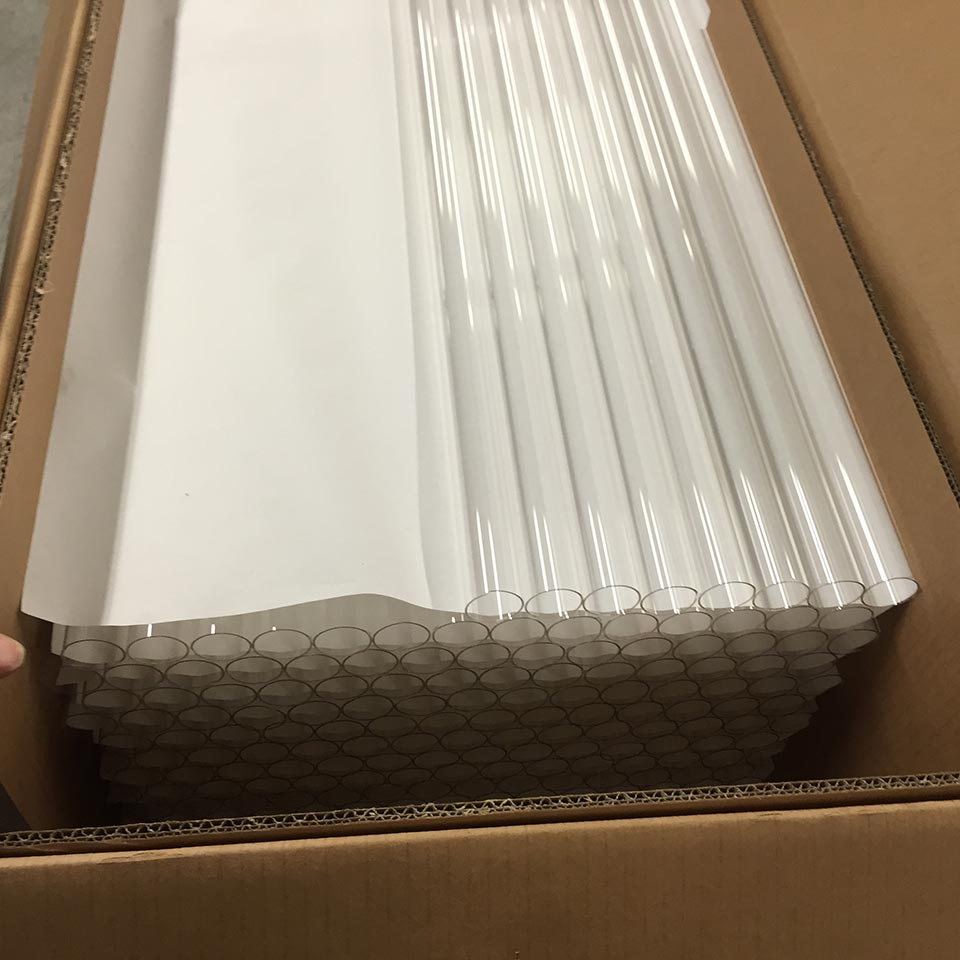
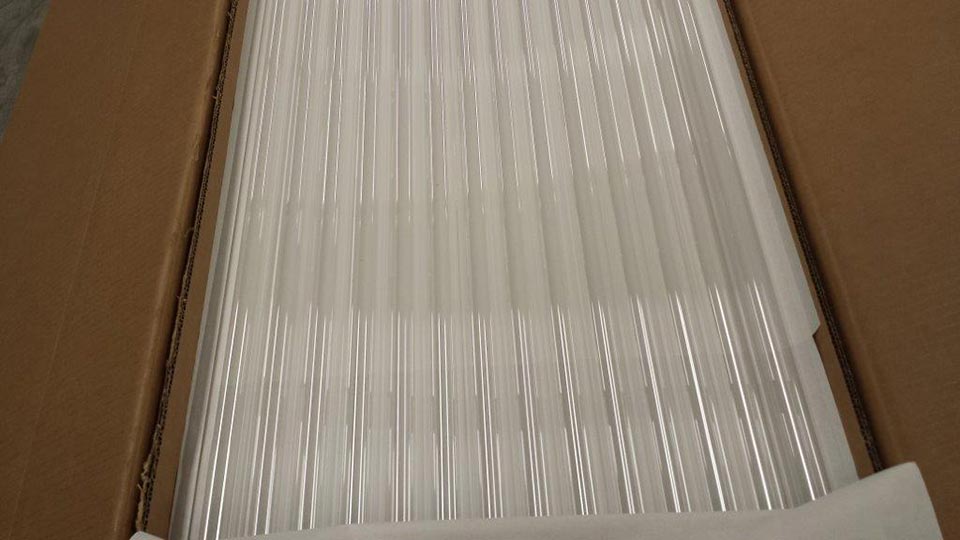
Late last year, Z-tech received an application from a well-known Dutch electronics manufacturer to automate the handling of glass tubes. They concern glass tubes that are used in the automotive industry (xenon lamps) and the medical industry. Diameters range from 8 to 40 mm. Lengths from 400 mm to 2.100 mm.
Action concerns two aspects
Tubes are picked up from the production oven and placed in a cassette. Next, these cassettes are placed in a special installation to allow the tubes to undergo proper post-treatment. After treatment, the tubes are pulled out of the cassettes and placed in a “boiler”. Boilers are placed in ovens to give the pipes the correct hardness.
The action thus concerns two aspects:
- Inserting pipes from the ovens into cassettes
- Emptying the cassettes and placing the pipes in boilers.
In addition, tubes are placed in boxes directly from the cassettes.
Challenge by very fragile product
Because they are very fragile products, the solution was not obvious and accompanied by the necessary technical challenges. Due to the large variation in product diameters and lengths it was clear that the robot had to handle a robot.
High production rates and short cycle times
However, the grab system to be used was less obvious and therefore, Z-tech first conducted a feasibility study. Due to high production speeds and short cycle cycles, it was not possible to fix all tubes per piece. A gripper system had to be developed that is capable of grabbing multiple tubes at the same time.
Solution is high volume vacuum syste
Finally, a solution has been found, with the smaller diameter tubes being sealed multiple by means of a high volume vacuum system. The contact surface between gripper and product is made of hard fabric. With the larger diameter pipes, the tubes are processed single pieces. When removing the tubes from the cassettes, the upper layer of tubes in the cassette is first scanned with an ultrasonic sensor (height measurement). This information is stored in the robot control and determined the pickup position. With this system, the manufacturer has been able to reduce its production costs.